You built a services business, and it worked. Then you built a product, because that is where scale lives. Now you lead a company with two business models under one brand.
But your hybrid SaaS website was designed for one. For companies investing in SaaS website development or a full website revamp, this is the most expensive oversight. When services and product are forced onto a single homepage, both audiences bounce.
Enterprise buyers assume you lack depth. Product-led buyers assume you are too heavy. This is not a design problem. It is an architecture problem. And it directly impacts B2B trust, pipeline, and valuation.
The Fundamental MisAlignment in SaaS Website Development
Services and product operate on opposing commercial logic.
Services are consultative, bespoke, and relationship-driven. The buyer asks: “Can you solve my specific problem?”
Product is self-serve, repeatable, and time-to-value driven. The buyer asks: “Can I get value in 2 minutes?”
When both are presented with one hero, one menu, and one CTA, you create ambiguity. And in B2B, ambiguity kills B2B trust before the first sales call.
6 Examples How SaaS Market Leaders Designed Their Websites
Leading companies now treat SaaS website development services as a strategic exercise, not a cosmetic one. Here we decoded how the industry leaders balanced their products and services on their websites.
1. PTC / ThingWorx: Product First, Services as Accelerant
Model: IoT Platform + IoT Consulting
PTC leads with ThingWorx, the Industrial IoT Platform. Use cases, capabilities, and trials dominate the homepage.
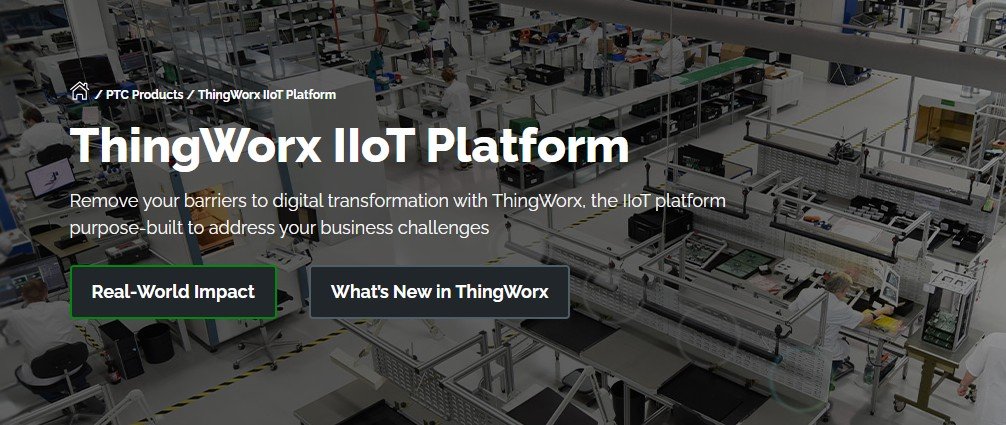
PTC Professional Services lives in the navigation as the path to accelerate enterprise deployment.
Lesson:
In SaaS website development, lead with the asset that scales. Position services as risk reduction.
2. Siemens Xcelerator: Architectural Separation
Model: MindSphere IoT OS + Siemens Advanta Consulting
Siemens uses two distinct properties. Xcelerator.com is product-centric. Advanta.com is services-centric.
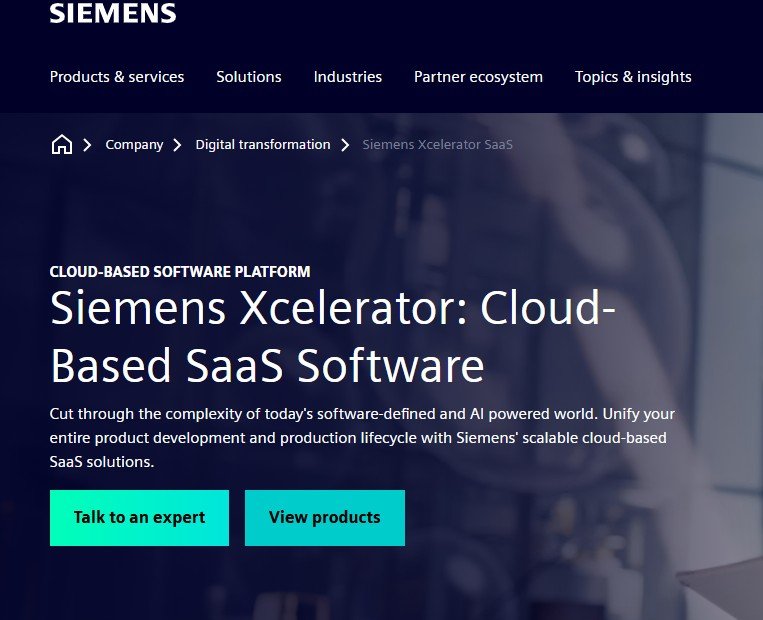
The corporate site offers two clear doors: “Explore IoT Solutions” and “Talk to Our Experts”.
Lesson:
When buyer intent diverges, separate domains or navigation silos protect clarity.
3. Samsara: Sell Outcome, Introduce Services in Sales
Model: IoT Platform + Professional Services
Samsara’s homepage is 100% product. Dashboards, devices, ROI calculators.

Services are never mentioned in marketing. They are introduced post-demo as implementation packages.
Lesson:
Do not create friction in acquisition. Use SaaS content marketing to sell outcomes, then layer services.
4. Webflow: The Two-Door Homepage
Model: Website Builder SaaS + Agency Partner Services
Webflow presents two equal pathways above the fold: “Build Your Site” and “Hire a Webflow Expert”.
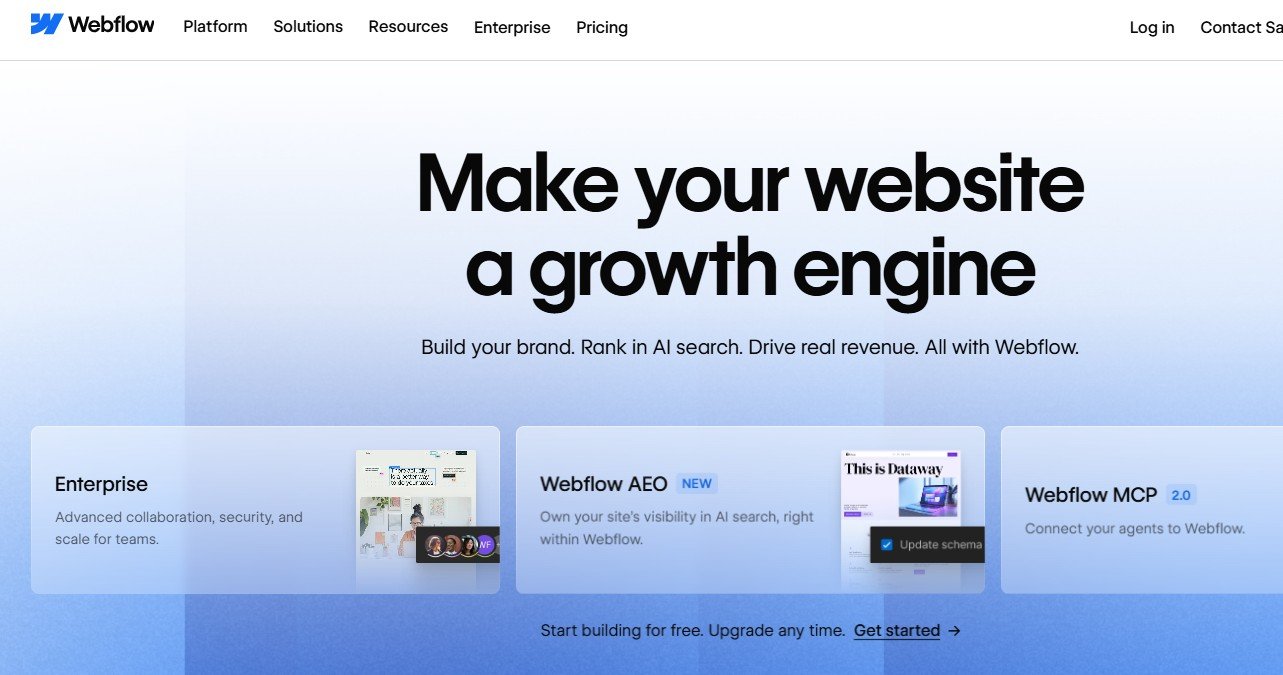
Each path leads to a dedicated experience with dedicated messaging and CTAs.
Lesson:
You can house two models on one site. But you must give each buyer their own entrance.
5. HubSpot: Hierarchy of Scale
Model: CRM SaaS + Onboarding & Strategy Services
HubSpot’s homepage is entirely product-led. Pricing, features, free tools.
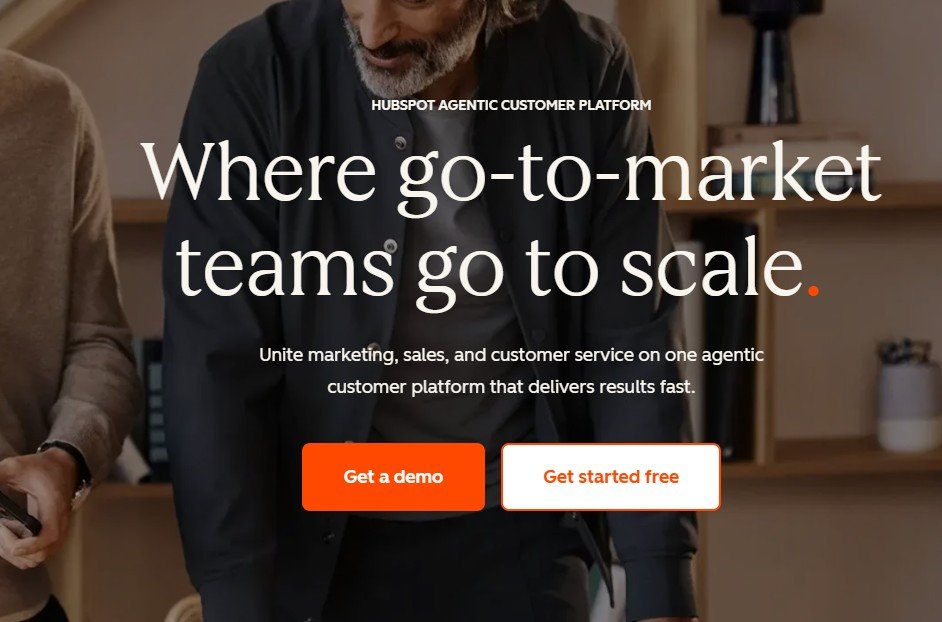
Services are tucked under “Services” in the nav and sold as expansion after product adoption.
Lesson:
For SaaS website development services, the homepage must serve the motion with the highest volume.
6. Vercel: One Brand, Two Languages
Model: Developer Platform + Enterprise Solutions Team
Vercel speaks to developers with code and docs. It speaks to executives with “Contact Sales”.
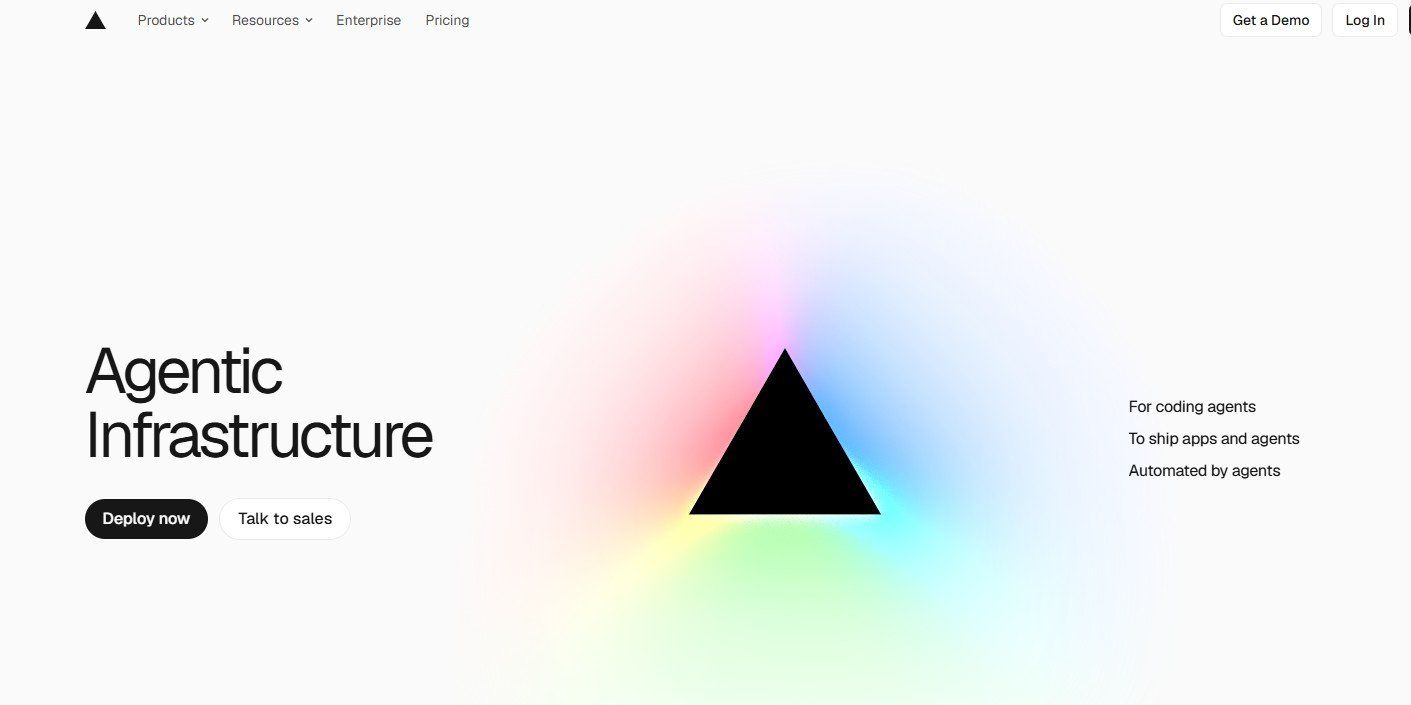
Same brand, two lexicons, two conversion paths.
Lesson:
You can address two audiences, but you cannot use one voice.
Three Strategic Errors in Hybrid SaaS Website Development
Error 1: The Omnibus Value Proposition
“We are a consultancy, platform, and AI partner.” This does not signal breadth. It signals incoherence. Hybrid brands need a primary narrative.
Error 2: Conflated Commercial Models
Putting “$99/month” next to “Custom Proposal” destroys pricing credibility for both. Each model needs its own page and positioning. This is a core part of any website revamp services engagement.
Error 3: A Single Call to Action
“Book a Demo” repels self-serve users. “Start Trial” trivializes enterprise buyers. If you sell both, your SaaS website development must include two CTAs above the fold.
The Cost of Inactions: Beyond No Conversions
A confused website erodes more than leads. It reduces B2B trust because buyers cannot categorize you. It creates internal conflict between sales and product teams.
It complicates fundraising because investors cannot define your model. You are investing in SaaS content marketing and ads to drive traffic. Your homepage is undermining that investment.
How to Audit Your SaaS Website Today
Before any website revamp, run this 2-step diagnostic:
- The 5-Second Test: Can a visitor tell in 5 seconds if you sell software or services?
- The Pathway Test: Do you offer two distinct journeys for two distinct buyers?
If the answer is no, you need structural changes, not just new copy.
What Comes Next
A website design is not about aesthetics. It is about architecture. In our next article, we will release The 2-Door Framework for SaaS website development.
It is the exact methodology we use to separate Services and Product on one website without splitting the brand or doubling CAC. We will share the wireframes, messaging logic, and implementation steps.
About White Winter Marketing
WWM provides SaaS website development services and website revamp services for B2B companies selling both services and product.

We help you build B2B trust, clarify positioning, and increase conversions. Request Your Free Website Audit.